Prompt3819 字符
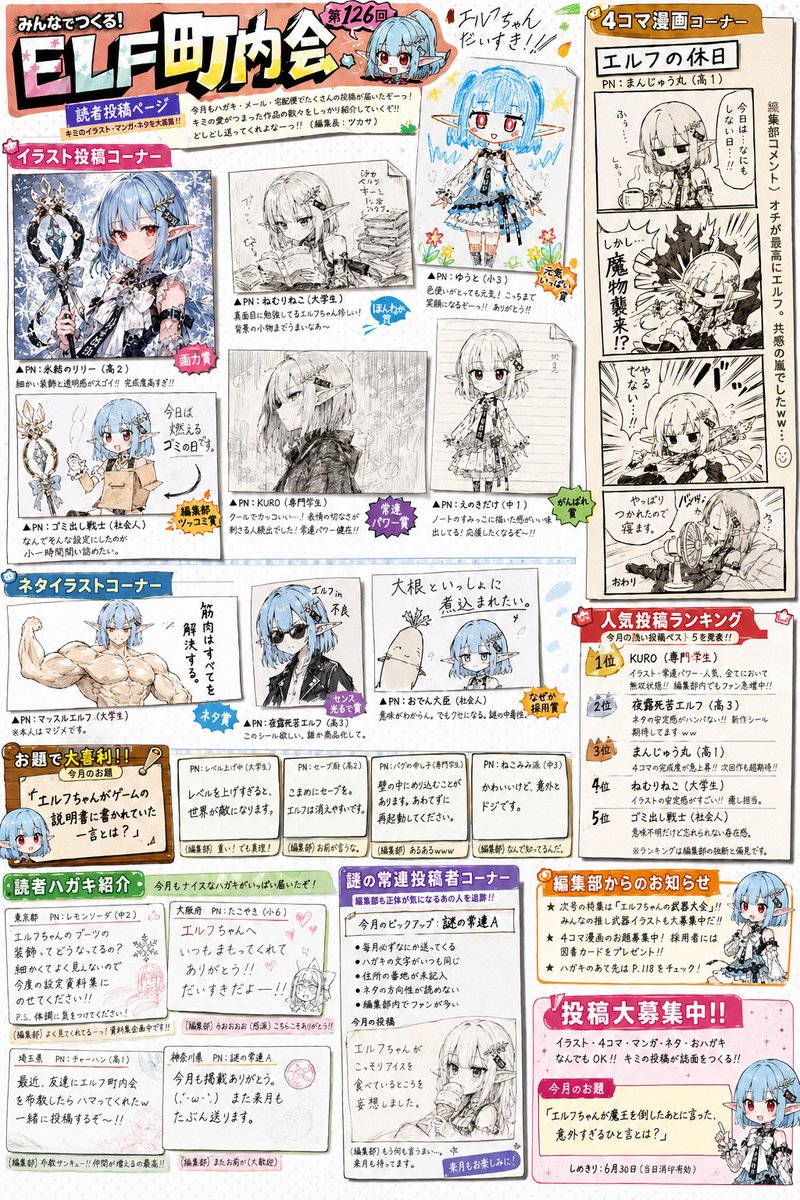
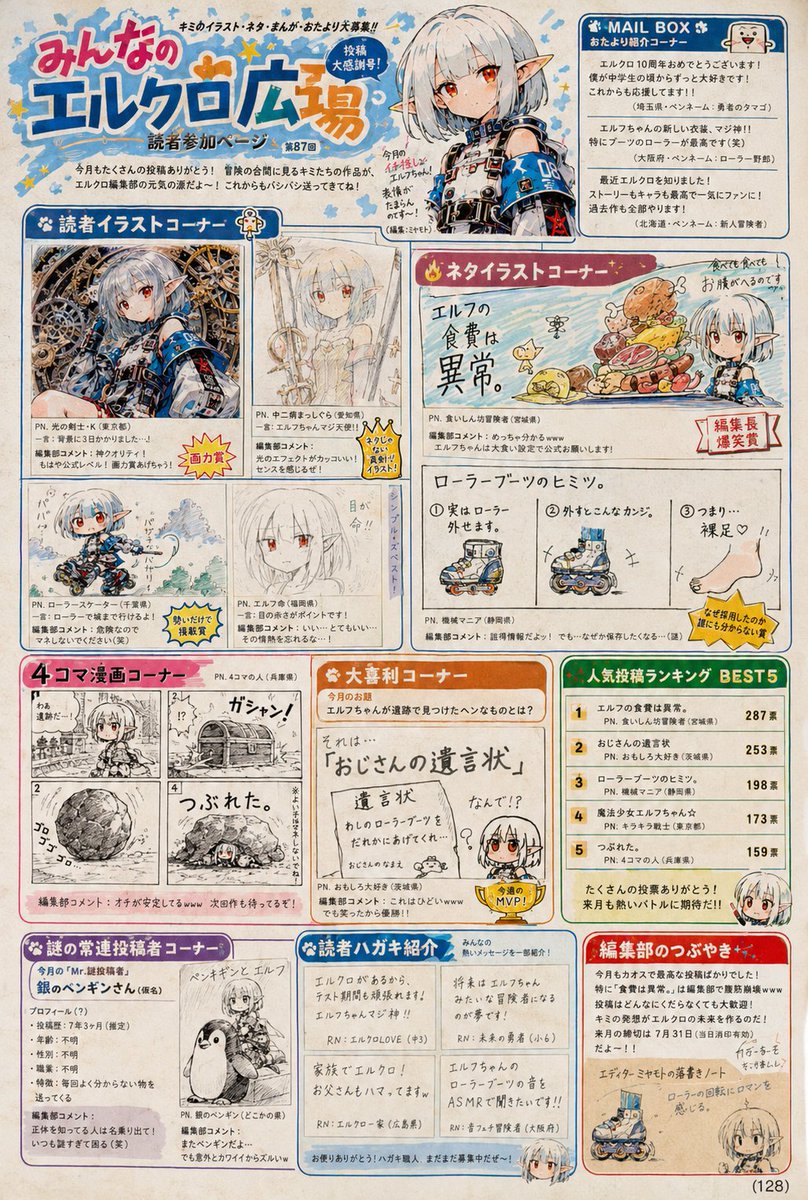
Create a reader submission corner page for an official fan magazine of a non-existent, popular series, featuring the character from the reference image as the protagonist. This is not a cover. This is not a poster. This is not an art book. This is a reader-participation page found in the middle of a magazine. Strongly reference the reader submission corner culture of gaming, anime, hobby, and children's magazines from the {argument name="era" default="1990s to 2000s"}. Multiple sections exist within the page. You may freely compose sections such as: Reader Illustration Corner, Gag Illustration Corner, 4-panel Manga Corner, Caption Contest Corner, Editorial Comments, Reader Postcard Showcase, Popularity Ranking, and a Mysterious Regular Contributor Corner. The entire page is colorful and lively. It should have the feel of a magazine edited and laid out by hand. Digital design should not be too polished. Characters appear in various places on the page. However, they are depicted not just as official art, but as fan submissions. Gag expressions, parodies, slice-of-life jokes, and slight character breaks are welcome. The readers have loved this work for years and are used to joking with the characters. There are many speech bubbles, comments, and editorial quips. All text should be natural Japanese. Avoid AI-specific gibberish. Information density should be like a real printed magazine page. Important: Although the work is fictional, make the magazine culture extraordinarily realistic. Readers should have the vibe of talking about a real existing work. Establish it as a 'reader submission corner of a long-running popular series.' Prohibit simple character introduction pages or simple fan art collections. Prioritize the feeling of the editorial department and readers playing together. Each submission should have a clear individuality. Naturally mix works in the page such as: god-tier high-quality art, advanced amateur works, high school level works, works drawn earnestly by elementary schoolers, gag manga, 4-panel manga, doodle-style gag illustrations, pencil drawings, and monochrome manuscripts. For each work, the line habits, degree of deformation, artistic skill, composition, manga expression, inking quality, and screen tone processing should differ greatly. They must not all be drawn in the same style. It must not look like a collection of works by the same artist. Make it look like the editorial department truly selected works submitted by many readers. Reader submissions should not be drawn directly on the page as finished illustrations, but should look like submitted manuscripts sent to the editorial department that were scanned, cut out, and laid out on the page. Paper texture, print quality, scan quality, line density, manuscript size, and margins can vary by work. Include works that look like printed postcards, photocopied manuscripts, parts of manga manuscripts, and illustration submissions. The editorial department does not select works based on skill alone. They prioritize humor, creativity, gag potential, impact, and reader popularity. Therefore, high-skill and amateur works naturally coexist. Editorial comments also differ by work. Playful awards like 'Art Prize,' 'Gag Prize,' 'Editor-in-Chief's Laugh-Out-Loud Prize,' 'Published-on-Momentum-Alone Prize,' or 'Nobody-Knows-Why-This-Was-Selected Prize' may exist. Especially Important: The moment one sees the page, they should feel, 'This is a reader submission page from an old game or anime magazine.' The more details you look at, the more the individuality of each contributor, the editorial team's antics, the regular contributor culture, and the history of the long-running series should be conveyed. Prioritize the atmosphere of the editorial department and readers playing together for years.

![[路易威登]](/cached-gh/jau123/tweets/2013325907843219831/0.jpg)

![[品牌名称] + [产品]](/cached-gh/jau123/tweets/2037967998565089736/0.jpg)